venerdì 1 gennaio 2016

1 January


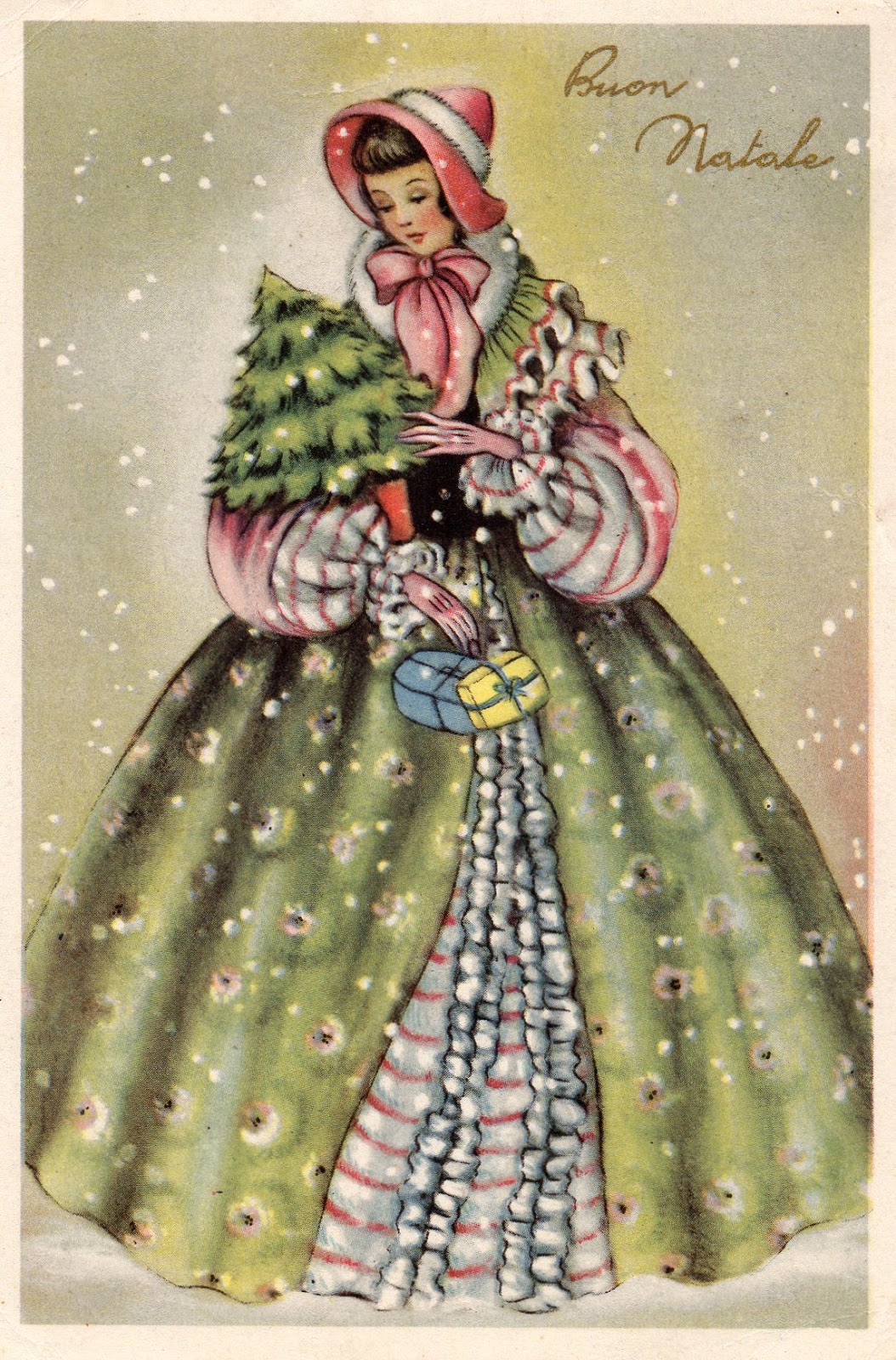
Snow-flakes

Out of the bosom of the Air,
Out of the cloud-folds of her garments shaken,
Over the woodlands brown and bare,
Over the harvest-fields forsaken,
Silent, and soft, and slow
Descends the snow.

Dal seno dell’Aria, 
Scossi dalle pieghe di  nuvole delle sue vesti, 
Sui boschi scuri e nudi, 
Sui campi abbandonati, 
Silente, lenta lieve 
Scende la neve. 

Even as our cloudy fancies take
Suddenly shape in some divine expression,
Even as the troubled heart doth make
In the white countenance confession,
The troubled sky reveals
The grief it feels.

Mentre a un tratto vaghe fantasie 
Si fissano in divina espressione,
E mentre il cuore gravato 
E mentre il cuore turbato rivela
A quel candore rende confessione,
Il cielo turbato rivela
Il dolore che prova.

This is the poem of the air,
Slowly in silent syllables recorded;
This is the secret of despair,
Long in its cloudy bosom hoarded,
Now whispered and revealed
To wood and field.

E’ la poesia dell’Aria, lentamente,
In silenziose sillabe scandita.
Ed è segreto di disperazione, 
Nel nuvoloso seno accomulata
A lungo, e adesso mormorata,
Svelata al bosco e al campo.

Henry Wadsworth Longfellow
1807–1882


giovedì 31 dicembre 2015

Happy New Year!!

My Dearest Readers,
Two great authors for my wishes of an Happy New Year. My sentence would never be as beautiful as their, so I trust on those written by authors that I admire so much to wish all of you a lucky and prosperous New Year!:)

“If, then, I were asked for the most important advice I could give, that which I considered to be the most useful to the men of our century, I should simply say: in the name of God, stop a moment, cease your work, look around you.” 
Leo Tolstoy, Essays, Letters and Miscellanies

Have a great New Year!!

Vintage Christmas Postcard from Miss Jane Collection

Miei cari lettori, 
due grandi autori per i miei Auguri di Buon Anno. Una mia frase non sarebbe mai stata bella come la loro, così mi affido a quelle scritte da coloro che ammiro tanto per augurare a tutti voi prospero e fortunato Anno Nuovo!

“Quella vita ch'è una cosa bella, non è la vita che si conosce, ma quella che non si conosce; non la vita passata, ma la futura. Coll'anno nuovo, il caso incomincerà a trattar bene voi e me e tutti gli altri, e si principierà la vita felice. Non è vero?” 
 Giacomo Leopardi, Operette morali

Auguri e Buon 2016!!


Vintage Christmas Postcard from Miss Jane Collection

mercoledì 30 dicembre 2015

30 December 1906

In the nineteenth and early twentieth century, birds and Robins were a wildlife symbol  of Christmas and the favourite subject of the Cristmas card manufactures.

Nel diciannovesimo e all'inizio del ventesimo secolo, gli uccelli ed particolare i pettirossi diventarono il simbolo della fauna selvatica e il soggetto preferito dei biglietti natalizi.

Vintage Christmas postcard from Miss Jane collection
Here is  a beautiful description of nature and birds take from 'The Country diary of an Edwardian lady' written by Edith Holden on this day 30 December 1906.

'The frost still holds, snow lightly throughout the day. The bird have become wonderfully bold this last week since thei usual hunting grounds have been buried in snow. The Blackbirds and Thrushes are usually rather shy, and fly away at the approch of anyone, but now, they only hop away to a little distance and sit watching with their bright eyes, from beneath the friendly shelter of a bush, waiting to go back to their feast of crumbs. The Tits and Robins and Sparrows scarcely take any notice of one. I have noticed Chaffinches feeding among the other birds the last few days, they seldom came to feed, though in the Spring they are often to be seen on the lawn, busily engaged in picking out the moss from the turf, for their nests'.
(The Country Diary of an Edwardian Lady, Edith Holden, 1906) 

The Country Diary of an Edwardian Lady, Edith Holden, 1906

Nel 'Diario di campagna di una signora inglese del primo Novecento' scritto da Edith Holden nel 1906, in questa giornata del 30 Dicembre, troviamo una bellissima testimonianza della natura, delle sue sensazioni e del mutare della stagione. 


'Il gelo perdura tutt'ora, c'è stata una leggera nevicata lungo tutto il giorno. Gli uccelli sono diventati arditi in quest'ultima settimana, da quando il loro abituale terreno di 'caccia' è rimasto  sepolto dotto la neve.  Merli e i Tordi sono in genere piuttosto timidi, e quando qualcuno si avvicina se ne volano via, ma ora si accontentano di saltellare via a breve distanza e poi si fermano, guardandovi con uno sguardo vivace dal di sotto del sicuro rifugio di un cespuglio attendendo solo di tornare al loro posto di briciole. Le Cince, i Pettirossi e i Passeri raramente fanno attenzione a qualcuno. Mi sono accorta che i Fringuelli in questi ultimi giorni, mangiavano in mezzo agli altri uccelli, essi che vengono raramente qui a mangiare sebbene in primavera si vedano spesso sul prato rasato, alacremente affaccendati a estrarre col becco muschio dal tappeto erboso, per fare i loro nidi'.


Art thou the bird whom Man loves best,
The pious bird with the scarlet breast,
Our little English Robin;
The bird that comes about our doors
When autumn winds are sobbing?

The Redbreast Chasing the Butterfly, 
William Wordsworth, 1806

Robin, by Harriet M. Bennett

Sei tu l'uccello che l'uomo ama di più,
Il pio uccello con il seno scarlatto,
Il nostro piccolo Robin inglese;
L'uccello che arriva sulle nostre porte
Quando i venti autunnali stanno singhiozzando?
The Redbreast Chasing the Butterfly, 
William Wordsworth, 1806
lunedì 28 dicembre 2015

Christmas postcards


Vintage Christmas postcard from Miss Jane collection
Although the origin of Christmas cards came from the early '800 the world’s first known Christmas postcard appeared in London in 1843, when Sir Henry Cole hired a painter and illustrator John Calcott Horsley to design a holiday card to send to his friends and acquaintances.  They designed the first postcard and, as it had a great they began to be sold them for 1 shilling each!

Sebbene l'origine delle cartoline natalizie risale agli inizi dell'800 sotto forma di biglietti scritti dai scolari, la vera diffusione delle cartoline si ebbe a aprtire dal 1843 quando apparve  a Londra la prima cartolina di Natale a commissionata da Sir Henry Cole ad un suo amico illustratore John Horsley Calcott come un biglietto di auguri da inviare ai suoi amici e conoscenti. Queste cartoline inziarono ad essere vendute ma erano molto costose. Venivano vendute ad uno scellino!

Vintage Christmas postcard from Miss Jane collection
It was only in the mid-nineteenth century with the advent of the industrial production of postcards and postal rates cheaper that Christmas cards became much more popular and were produced in large numbers. In 1870 the cost of sending a post card, and also Christmas cards, dropped to half a penny. This meant even more people were able to send cards.
In the nineteenth century postcards illustrations were winter scene landscapes, Santa Claus, robins, nativity, floral patterns fringed and others. At the end of the eighteen century,  in England were spread the first greeting cards folding called hold-to-light ".

Fu solo verso la metà del XIX secolo, con l'avvento della produzione industriale e tariffe postali più economiche che le cartoline di Natale divennero molto più popolari e furono prodotte in gran numero. Nel 1870 il costo di invio di una cartolina scese a mezzo penny. Ciò significò che sempre più persone erano in grado di poterle inviare. 
Nel XIX sec. i temi rappresentanti nelle cartoline erano vari: paesaggi invernali, Santa Claus, i pettirossi, scene di natività ma anche motivi floreali con bordi frangiati ed altre fantasie.  In Alla fine dell'800 Inghilterra si diffusero le prime cartoline d'auguri pieghevoli chiamate "hold to light" che recavano un disegno sull'esterno e un saluto all'interno.

Vintage Christmas postcard from Miss Jane collection
In 1850, the Christmas postcards were introduced in the United States, thanks to a printer from New York, RH Pease, who created greeting cards in black and white featured with various Christmas illustrations. However, it was thanks to Louis Prang, a German-born entrepreneur, owner of most of the printing works of the country that the tradition began, starting from 1875, to spread overseas. Prang was called the "Father of Christmas cards in the US". 


Intorno al 1850 l'usanza di inviare cartoline fu introdotta anche negli Stati Uniti da un tipografo di New York, R.H. Pease, che realizzò delle cartoline d'auguri in bianco e nero con raffigurati vari soggetti relativi al periodo natalizio. Fu però grazie a Louis Prang, un imprenditore di origine tedesca, proprietario della maggior parte delle stamperie del paese che la tradizione cominciò, a partire dal 1875, a diffondersi anche oltreoceano. Prang fu definito il "padre delle cartoline natalizie negli Stati Uniti".


"It is true that the world has had to confront moments of darkness this year, but the Gospel of John contains a verse of great hope, often read at Christmas carol services: 'The light shines in the darkness and the darkness has not overcome it.'"
Queen Elisabeth II - Christmas speech  2015

sabato 26 dicembre 2015

St. Stephen Day


Boxing Day is celebrated on December 26th at St. Stephen Day
Stephen was a deacon in the early church at Jerusalem who aroused the enmity of members of various synagogues by his teachings. Accused of blasphemy, he was stoned to death in AD 35 and became the first Christian martyr. As he was the apostles’ keeper of alms for the poor the giving of alms has always been associated with this day. 
At Boxing Day is the tradition of opening the alms boxes placed in churches over the Christmas season. The contents of these boxes were distributed amongst the poor. 
"The day after Christmas the servants and dependents obtain their share of the gifts in what is called a Christmas Box" (Holidays & Happy-Days, by Hamish Hendry, 1901)
Holidays & Happy-Days, by Hamish Hendry, 1901
souce: Project Gutemberg eBook 

Il 26 dicembre si celebra il Boxing Day, un'antica tradizione le cui origini non sono ben note. 
E' il giorno di Santo Stefano, il diacono che per i suoi insegnamenti fu accusato di blasfemia e condannato a morte. Egli è ricordato come il primo martire della chiesa cristiana e poiché era colui che raccoglieva le elemosine per distribuirle, questo giorno è stato associato alla carità per i poveri.
Nelle famiglie aristocratiche nel giorno che seguiva quello di Natale, era tradizione dare ai servi e ai dipendenti un dono dal Christmas box, la scatola di Natale.


In the past time, today was also a Wren Day, a day in which hunting foxes and squirrels was traditional as was shooting birds, particurarly the wren that was put on top of a decorated pole.
A crowds of mummers or strawboys celebrate the wren by dressing up in masks, straw suits and colourful motley clothing and music bands, parade through the towns and villages. These crowds are sometimes called wrenboys.
As the wren was a cave dweller, it acquired the reputation of being a go-beetween with the underworld and the forces of darkness.
In the Celtic mithology wren was a symbol of the past year but the tradition of hunting the Wren is rich and varied. Historically, a wren was captured and though to bring good luck for the new year. Another legend has it that the wren was the cleverest bird of all.

Oggi si celebra anche il Wren Day, per l'antica usanza di cacciare alla volpe, agli scoiattoli e allo sricciolo (in inglese wren), un 'povero' uccellino a cui venivano attribuite molteplici leggende. Una volta ucciso veniva messo su di un palo decorato e portato in giro nei villaggi per scambiare donazioni con le piume come segno di buon augurio.
Queste sfilate erano tenute da folle di mimi (mummers) o strawboys che portavano lo scricciolo con vestiti in maschera accompagnati da bande sonore. Essi venivano anche chiamati wrenboys.
Poichè  lo scricciolo era solito abitare nelle caverne si credeva che fosse una sorta di creatura tra il mondo sotterraneo e le forze dell'oscurtià.
Ma altre leggende e tradizioni sono legate a questo volatile. Nella mitologia celtica lo scricciolo era un simbolo dell'anno passato la cui uccisione era un modo di assicurare il ritorno della luce. La trazione della caccia al Wren è ricca e varia; veniva catturato anche per portare buona fortuna per il nuovo anno. Un'altra leggenda vuole che lo scricciolo fosse l'uccello più intelligente di tutti.


A description of Mummers was written by Thomas Hardy in The return of native (1878) ...

Una descrizione di Mummers è stata scritta da Thomas Hardy in Il ritorno del nativo (1878) ..

"For mummers and mumming Eustacia had the greatest contempt. The mummers themselves were not afflicted with any such feeling for their art, though at the same time they were not enthusiastic. A traditional pastime is to be distinguished from a mere revival in no more striking feature than in this, that while in the revival all is excitement and fervour, the survival is carried on with a stolidity and absence of stir which sets one wondering why a thing that is done so perfunctorily should be kept up at all. Like Balaam and other unwilling prophets, the agents seem moved by an inner compulsion to say and do their allotted parts whether they will or no. This unweeting manner of performance is the true ring by which, in this refurbishing age, a fossilized survival may be known from a spurious reproduction".