mercoledì 25 novembre 2015

Thanksgiving Poem

Thanksgiving Day is on the fourth Thursday of November. It is a time to give thanks for the harvest and of the preceding year. Today, Thanksgiving means spending time with family and friends over a large feast. 

Il Giorno del Ringraziamento è il quarto Giovedì del mese di novembre. E' un momento per rendere grazie del raccolto appena concluso. Oggi Ringraziamento significa passare del tempo con la famiglia e gli amici in una grande festa. 


Lydia Maria Child, born on February 11, 1802, in Medford, Massachusetts, was a novelist, journalist, teacher, and poet. She was best known for her books on domestic life and racial equality and her work as an abolitionist to eliminate slavery. She died on October 20, 1880.
"Over the River and Through the Wood", is a Thanksgiving poem that celebrates the author's childhood memories of visiting her Grandfather's House. 


Lydia Maria Child, nacque l' 11 febbraio 1802, a Medford, Massachusetts. Fu una scrittrice, giornalista, insegnante e poetessa. E' conosciuta anche per i suoi libri sulla vita domestica e l'uguaglianza razziale e per il suo impegno come un abolizionista della schiavitù. Morì il 20 ottobre 1880.
"Over the River and Through the Wood" è una poesia del Ringraziamento che celebra i ricordi d'infanzia dell'autrice durante le sue visite alla casa del nonno.


Over the river, and through the wood,
To Grandfather's house we go;
the horse knows the way to carry the sleigh
through the white and drifted snow.


Over the river, and through the wood,
to Grandfather's house away!
We would not stop for doll or top,
for 'tis Thanksgiving Day.


Over the river, and through the wood—
oh, how the wind does blow!
It stings the toes and bites the nose
as over the ground we go.


Over the river, and through the wood—
and straight through the barnyard gate,
We seem to go extremely slow,
it is so hard to wait!


Over the river, and through the wood—
When Grandmother sees us come,
She will say, "O, dear, the children are here,
bring a pie for everyone."


Over the river, and through the wood—
now Grandmother's cap I spy!
Hurrah for the fun! Is the pudding done?
Hurrah for the pumpkin pie!


Over the river, and through the wood,
with a clear blue winter sky,
The dogs do bark, and children hark,
as we go jingling by.


Over the river, and through the wood,
to have a first-rate play.
Hear the bells ring, "Ting-a-ling-ding!",
Hurrah for Thanksgiving Day!


Over the river, and through the wood,
no matter for winds that blow;
Or if we get the sleigh upset
into a bank of snow


Over the river, and through the wood,
to see little John and Ann;
We will kiss them all, and play snow-ball
and stay as long as we can.


Over the river, and through the wood,
trot fast, my dapple-gray!
Spring over the ground like a hunting-hound!
For 'tis Thanksgiving Day.


Over the river, and through the wood,
Old Jowler hears our bells.
He shakes his pow, with a loud bow-wow,
and thus the news he tells.


giovedì 5 novembre 2015

Bonfire Night

 Bonfire Nigh by Molly Brett
In Great Britain, Bonfire Night is associated with the tradition of celebrating the failure of Guy Fawkes' actions on 5 November.
The night commemorates deliverances from Robert Catesby's unsuccessful plot to blow up with gunpowder the King, House of Lord and House of Commons this day in 1605. 
The Gunpowder Plot aimed to paralyse government by blowing up the king and the Parliament while in session. The conspirancy was revealed and many Chatolics were put to death .
An Act of Parliament designated each 5 November as a day of thanksgiving for "the joyful day of deliverance", and remained in force until 1859. Although he was only one of 13 conspirators, Fawkes is today the individual most associated with the failed Plot
A bonfire, fireworks and torchlight procession are traditional on this night and effigy of Guy Fawkes is burned on the fire.


In Gran Bretagna, la notte dei falò (Bonfire Night) è associata alla Congiura delle polveri (The Gunpowder Plot) del 1605, un complotto progettato da un gruppo di cattolici inglesi a danno del re Giacomo I d'Inghilterra.
Il complotto ideato da Robert Catesby prevedeva di far esplodere la camera dei lord e di uccidere così il re ed il suo governo durante la cerimonia di apertura del Parlamento inglese, lo State Opening. Il complotto fu sventato da una misteriosa lettera che ne rivelò l'esistenza al re. Una legge del Parlamento designò ogni 5 novembre come giorno di ringraziamento e rimase in vigore fino al 1859. Anche se fu solo uno dei 13 cospiratori, Fawkes è rimasto il principale ideatore della congiura.
Falò, fuochi d'artificio e fiaccolate sono tradizionali in questa notte che prevede che l'effigie di Guy Fawkes sia bruciata sul fuoco.


mercoledì 14 ottobre 2015

The Wind from Hastings (1066)

The Battle of Hastings was fought on 14 October 1066 between the Norman-French army of Duke William II of Normandy and an English army under the Anglo-Saxon King Harold Godwinson. The battle was the beginning the Norman conquest of England. 

La battaglia di Hastings ebbe luogo il 14 Ottobre del 1066 tra l'esercito del duca Guglielmo di Normandia e l'esercito Anglo-Sassone comandato da Re Aroldo. La battaglia segno l'inizio della conquista normanna in Inghilterra.


"When the wind blows from the channel, it carries to us the smell of rotting flesh on Senlac Ridge. For days the Bastard's men hace been burying the Norman dead, cursing as they work  in the October sun and covering thei faces with cloths against the stench. Many of Harold's men still lie where they fell. Swollen and grotesque, they guard in death that awful piece  of ground the could not hold in life" 
(From The Wind from Hastings, by Morgan Llywelyn)

“Quando il vento soffia dal Canale, porta con sé l’odore delle carni in putrefazione di Senlac Ridge. Per giorni e giorni gli uomini del Bastardo hanno seppellito i morti normanni, imprecando per tutto quel lavoro sotto il sole di ottobre, e coprendosi il volto con degli stracci per resistere al fetore. Molti uomini di Aroldo giacciono ancora là dove caddero. Gonfi e grotteschi, da morti fissano quello schifoso lembo di terra che non riuscirono a difendere in vita”
(Tratto da Il Vento di Hastings, Morgan Llywelyn, Editrice Nord) 

The Wind of Hastings by Luis Royo
On October14, 1066 England changed the course of its history. King Harold second and last King of the Anglo-Saxons will be defeated by the army to Hastings Norman of William the Conqueror. The throne of England passes the so Norman dynasty. From this event onwards, the country knew no more, for the rest of the story, any kind of invasion.
Harold died on the battlefield. He was killed shot in the eye with an arrow,

Era il 14 ottobre del 1066 e l’Inghilterra si apprestava a cambiare il corso della sua storia. Re Aroldo secondo e ultimo Re degli Anglosassoni verrà sconfitto ad Hastings dall'esercito normanno di Guglielmo il Conquistatore. Il trono d'Inghilterra passa così alla dinastia normanna. Da questo avvenimento in poi il paese non ebbe più, per il resto della storia, alcun tipo di invasione.
Re Aroldo morì nella battaglia stessa in seguito ad una freccia che gli si conficcò nell'occhio. 


The Wind of Hastings by Luis Royo
Edyth, wife of King Harold of England, disappeared forever on the day of the great Battle of Hastings in 1066, taking with her the legitimate heirs to the thrones of England and Wales. 
In the novel 'The Wind from Hastings', written by Morgan Llywelyn (published in 1978), the protagonist Edyth tells all the most important episodes of her life (childhood in Mercia in the castle of her father, exile in Ireland, the unexpected marriage to the Prince of Wales, and the last years with Harold until the day of the battle that will mark the end of an era).
This is the story of an amazing woman, who loved and married the King of Wales and then the man who would be King of England, only to witness his historic defeat by the light of Halley's Comet.

Edyth di Mercia, la moglie di Aroldo, scompare per sempre il giorno della grande battaglia portandosi con sé gli eredi al trono del Galles e d'Inghilterra.  Tra verità e finzione storica nel romanzo ‘Il vento di Hasting’ (pubblicato nel  1978), la scrittrice Morgan Llywelyn ripercorre  attraverso il racconto di Edyth tutti gli episodi più significativi della sua vita (l’infanzia in Mercia nel castello del padre, l’esilio in Irlanda, l’inaspettato matrimonio col Principe del Galles, e gli ultimi anni con Aroldo fino al giorno della battaglia che segnerà la fine di un’epoca).

Harold's death  Bayeux Tapestry  scene 57
The most valuable historical source documenting the Norman invasion in the island is the Bayeux tapestry, an embroidered on linen with coloured woollen yarns along approximately 70 meters wide and 50 cm made up of various pieces (currently exibits at the Centre Guillaume le Conquerant of Bayeux). Contains a representation of 626 characters: 250 horses and mules, 550 animals of all kinds, 37 buildings, 49 trees as well as castles, churches, ships, etc., for a total of 1500 figures!

La fonte storica più preziosa che documenta l'invasione normanna nell'isola è l’Arazzo di Bayeux, un ricamo ad ago tracciato con fili di lana di nove tinte naturali lungo approssimativamente 70 mt e largo 50 cm costituito da varie pezze di lino (attualmente è esposto al pubblico nel Centre Guillaume-le-Conquérant di Bayeux). Contiene la raffigurazione di 626 personaggi: 250 tra cavalli e muli, 550 animali di ogni genere, 37 edifici, 49 alberi oltre a castelli, chiese, navi, ecc., per un totale di 1500 figure!

"And Edith of the Swan's Neck walked
By the body that she loved.
She chanted litanies for his soul
With a childish, weird lament
That shuddered through the night. The monks
Prayed softly as they went".

The Battlefield of Hastings by Heinrich Heine

domenica 11 ottobre 2015

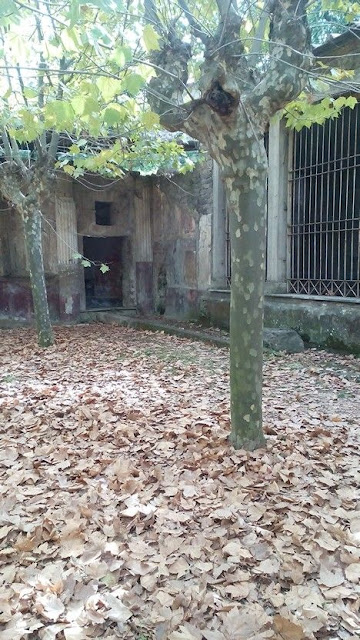
Autumn in a roman ruins

Villa San Marco

Stabiae, known today as Castellammare di Stabia, was one of the most favourites destinations of ancient Roman patricians. The sumptuous residential villas, unearthed in the mid '700 by Bourbon diggers, are a testament to the life of the rich patricians in the area.

Stabiae, oggi Castellammare di Stabia, fu una delle mete preferite dai Patrizi romani. Le sontuose ville residenziali , scoperte a metà del ‘700 da scavatori borbonici, sono una testimonianza della vita di ricchi patrizi nella zona.

Villa San Marco

Villa San Marco
Stabiae explorations lasted only a few years.  In 1782, the workers engaged on the Varano hill were sent to Pompeii and the archeological activity in Stabiae ceased. The villas, houses, and streets were reburied; and the frescoes, statues, and furnishings were placed in the Archaeological Museum of Naples.
It was not until 1950 that two magnificent Roman Villa on the Varano hill buried by the eruption of Vesuvius in 79 A.D. were partially excavated.

Gli scavi borbonici durarono pochi anni fino al 1782. Le maestranze furono spostate a Pompei e ville, case e strade ritornarono sotto terra mentre affreschi, statue e suppellettili preziosi furono portati al Museo Archeologico di Napoli.
Le ville romane, sepolte dall’eruzione del Vesuvio nel 79.d.c. furono riportate parzialmente alla luce a partire dal 1950.


Villa San Marco


Villa San Marco is one of the largest villas ever discovered in Campania, measuring more than 11,000 square metres, it has an atrium, a courtyard containing a pool, a triclinium with views of the bay, and a colonnaded courtyard. There are also many other small rooms, a kitchen and two internal gardens. Villa San Marco also has a private bath complex that is made up of calidarium, tepidarium, and a frigidarium. This villa is also important because it has provided frescoes, sculptures, mosaics and architecture, which show styles and themes comparable to those found in Pompeii and Herculaneum. After the eruption of Vesuvius in 79, the structure was explored for the first time by the Bourbons in the period between 1749 and 1782 and, later, by Libero D'Orsi between 1950 and 1962: it turned out, since its discovery, in a very good condition thanks to the thick, about five meters of ash and lapilli that had protected it from the neglect of the time.

Villa San Marco è la più grande villa romana scoperta in Campania che prende il nome da una cappella dedicata a San Marco, costruita nel XVII secolo proprio nella zona della villa, ormai scomparsa. Ha un'estensione di circa undicimila metri quadrati, di cui seimila riportati alla luce. Ha un atrio, una piscina, una cucina, una zona terme, e molte altri ambienti. Nella villa sono stati scoperti affreschi, sculture, mosaici e architetture comparabili quelle di Ercolano e Pompei, Dopo l'eruzione del Vesuvio del 79, la struttura fu esplorata per la prima volta dai Borbone nel periodo compreso tra il 1749 e il 1782 e, in seguito, da Libero D'Orsi tra il 1950 e il 1962: risultò, sin dalla sua scoperta, in un ottimo stato di conservazione grazie allo spesso strato, di circa cinque metri, di cenere e lapilli che l'avevano protetta dall'incuria del tempo.

Villa San Marco
Villa San Marco


Villa San Marco


Villa San Marco

Although we do not know exactly the name of the owner. Perhaps he was Narcissus, a freedman, based on some stamps found on the roof tiles, or the family of Virtii, which had graves not far from the building.

Nonostante non si conosca esattamente il nome del proprietario, sono state fatte diverse supposizioni che hanno portato a pensare che potesse appartenere o a un certo Narcissus, un liberto, sulla base di alcuni bolli ritrovati su delle tegole, oppure alla famiglia dei Virtii, i quali avevo dei sepolcri poco distanti dalla costruzione.

Villa San Marco


Villa Arianna


Villa Arianna
Named for the fresco depicting Dionysus saving Arianna from the island of Dia (a mythological name for Naxos), this villa is particularly famous for its frescoes, many of which depict light, winged figures. It is difficult to get a clear sense of this villa, however, because it grew over the course of 150 years. It has one of the largest courtyards of any Roman villa; measuring two stadia in length. 
Another feature of Villa Arianna is its private tunnel system that links the villa in its location on the ridge to the sea shore, which was probably only between 100 and 200 metres away from the bottom of the hill in Roman times. The shoreline has since changed, leaving the archaeological site further inland than it was in antiquity.

Villa Arianna
Villa Arianna
Villa Arianna è la villa d'otium (luogo di riposo) più antica di Stabiae, risalente al II secolo a.C. Essa è situata all'estremità ovest della collina di Varano, in posizione panoramica; occupa un'area di circa undicimila metri quadrati di cui attualmente scavati e visitabili soltanto duemilacinquecento.
Villa Arianna è  famosa per i suoi affreschi ed in particolare quello raffigurante Dioniso che salva Arianna dall'isola di Dia (un nome mitologico per Naxos). E 'difficile ottenere una pianta complessiva di questa villa. Al suo interno vi è uno dei più grandi cortili ritrovati in una villa romana.
Un'altra caratteristica di Villa Arianna è il suo sistema di tunnel privato che collega la villa nella sua posizione alla riva al mare, che era probabilmente solo a 100 e 200 metri di distanza dalla collina su cui in epoca romana sorgeva la villa. Il litorale da allora è cambiato, e oggo il sito archeologico è ben più distante dal mare rispetto all'antichità.

La Flora, Villa Arianna
Per saperne di più ho trovato questo video di Alberto Angela del 2007. Una bella ricostruzione aiuta a capire la bellezza e la gradiosità delle Ville. Buona visione!:)


martedì 29 settembre 2015

Michaelmas


Michaelmas, is the feast of Saint Michael the Archangel. It is celebrated on the 29th of September every year. As the date falls near the equinox, the day is associated with the beginning of autumn and the shortening of days. It is the time that the darker nights and colder days begin. The celebration of Michaelmas is associated with encouraging protection during these dark months (St Michael is one of the principal angelic warriors, protector against the dark of the night and the Archangel who fought against Satan and his evil angels).

Michaelmas, è la festa di San Michaele Arcangelo. Si celebra il 29 settembre di ogni anno. Poiché siamo vicino all’equinozio, questo giorno è associato con l'inizio autunno e delle giornate con poca luce.  Siamo nel tempo in cui le notti sono più scure e i girni più freddi.  San Michele protegge dai mesi bui (egli è uno dei principali guerrieri angelici, protettore contro il buio della notte e l'Arcangelo che ha combattuto contro Satana e i suoi angeli malvagi).

Leon Augustin Lhermitte - The Goose Girl of Mezy, 1892

In England Michaelmas  is one of the four  “quarter days” of the year. They fell on four religious festivals every three months close to the two solstices and two equinoxes.
In British and Irish tradition, the quarter days were the four dates in each year on which servants were hired, land was exchanged, school terms started, and rents were due. Quarter days are:
Lady Day (25th March), Midsummer (24th June), Michaelmas (29th September) and Christmas (25th December)

The Guide to General Information on Common Things (1868)

Nella tradizione britannica e irlandese, i quarter days erano le quattro date nelle quali veniva assunta la servitù e venivano pagate le rate e gli affitti. Questi giorni cadevano in coincidenza con delle feste religiose distanti all'incirca tre mesi l'una dall'altra.
I quarter days inglesi e gallesì sono:
Annunciazione del Signore (Lady Day, 25 marzo)
Natività di San Giovanni Battista (Midsummer Day 24 giugno)
Festa di San Michele Arcangelo (Michaelmas 29 settembre)
Natale (25 dicembre)


It used to be said that harvest had to be completed by Michaelmas as it marks the end of the productive season and the beginning of the new cycle of farming.
This day was also known as “Goose Day” because It was said that Queen Elizabeth I was eating her Michaelmas goose when she received the news of the defeat of the Spanish Armada and resolved to eat it on Michaelmas Day.
A dinner of roast goose heeding the old proverb: "If you eat goose on Michaelmas Day, you will never want money all the year round”.
The custom of celebrating Michaelmas Day as the last day of harvest was broken when Henry VIII split from the Catholic Church; today it is celebrate as the Harvest Festival.

Nei tempi antichi era usanza completare il raccolto entro il giorno di San Michele poiché la data rappresentava la fine della stagione del raccolto e l’inizio del nuovo ciclo di allevamento.
Questo giorno era anche conosciuto come “Giorno dell’Oca”. Si racconta che la regina Elisabetta I stava mangiando un oca quando ebbe la notizia della sconfitta della Armada spagnola e decise di mangiarla sempre il giorno di San Michele.
Un vecchio proverbio recita: "Se mangi oca il giorno di San Michele giorno, non vorrai soldi tutto l’anno”.
L'usanza di celebrare il giorno di San Michele come l'ultimo giorno di vendemmia terminò con lo scisma dalla Chiesa cattolica da parte di Enrico VIII. Oggi il giorno è celebrato come l’Harvest Festival.

The Michaelmas Daisy

Cicely Mary Barker Fairy

A flower for today is the Michaelmas Daisy, which flowers late in the growing season between late August and early October.
It seems that the Michaelmas Daisy fights against the advancing gloom of Autumn and Winter as St Michael is celebrated as a protector from darkness and evil.
The act of giving a Michaelmas Daisy symbolises saying farewell, perhaps in the same way as Michaelmas Day is seen to say farewell to the productive year and welcome in the new cycle.

The Michaelmas Daisy
Il fiore del giorno è la margherita di San Michele,  che fiorisce proprio tra la fine di agosto e l'inizio di ottobre.
San Michele è celebrato come un protettore dalle tenebre dal male così come questo fiore combatte con il suo fiorire contro il buio che avanza con l’autunno e l’inverno.
L'atto di donare una margherita di San Michele simboleggia l’addio, probabilmente come il giorno di San Michele saluta l’anno produttivo per dare il benvenuto al nuovo ciclo.

Michaelmas Daisies Plate
from ‘Favourite Flowers of Garden and Greenhouse’
by Edward Step (1896)

“The Michaelmas Daisies, among dede weeds, 
Bloom for St Michael's valorous deeds.
And seems the last of flowers that stood,
Till the feast of St. Simon and St. Jude.”